
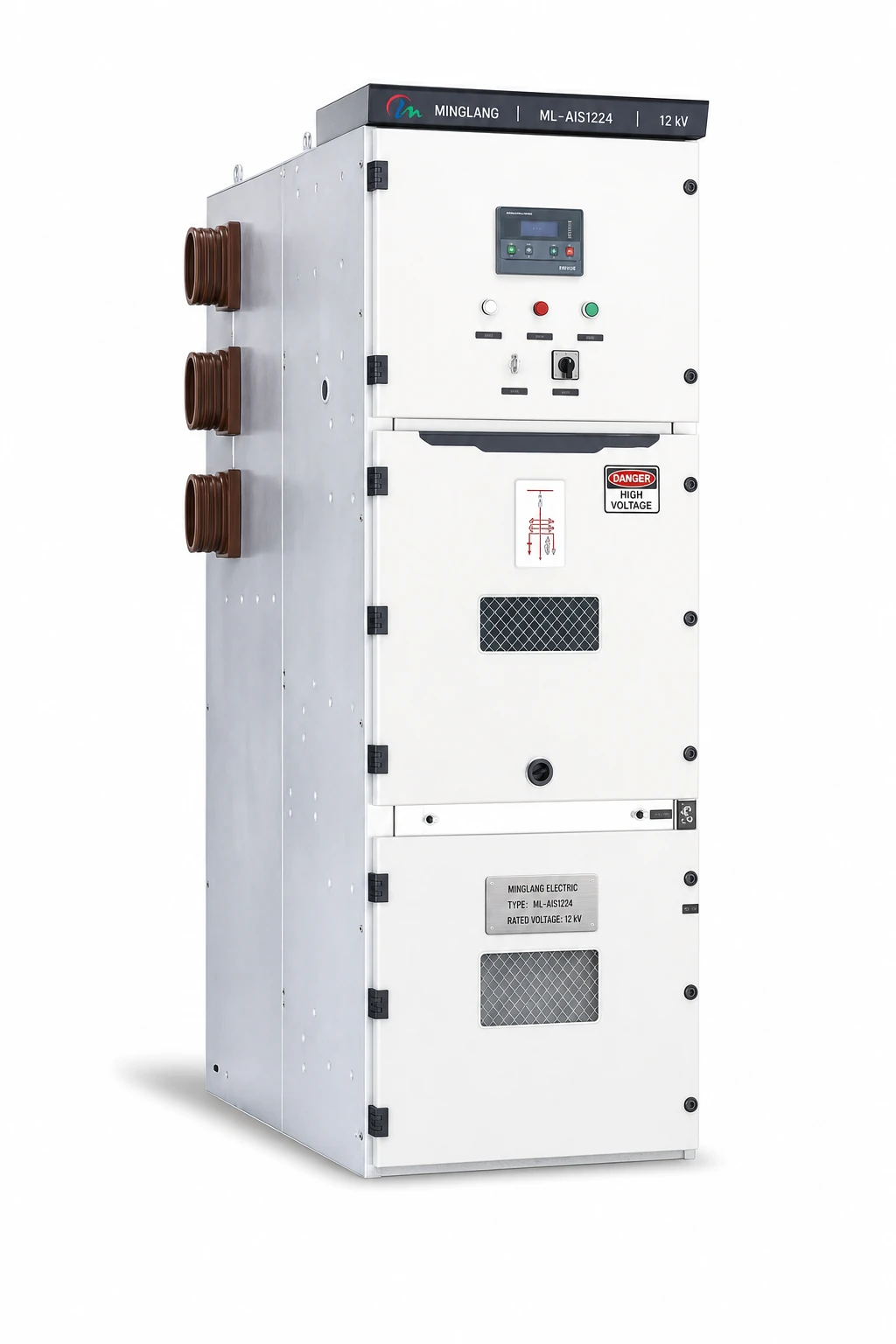
Yes—as supporting evidence, subject to a documented review. A GB/T 3906 type-test report can help an EPC, owner or consultant assess a proposed switchgear design. Acceptance depends on the cited editions, test scope, tested assembly, ratings, laboratory scope, differences from the offered configuration and written project approval. The document must remain described as a GB/T test report. It does not become an IEC 62271-200 report, an IEC certificate or proof that every offered panel is covered.
Why this question matters during vendor prequalification
International tenders often state “switchgear shall comply with IEC 62271-200” and ask for type-test evidence. A Chinese manufacturer may hold reports issued to GB/T 3906. Both documents address AC metal-enclosed switchgear and controlgear, but their shared subject does not settle acceptance.
As of 26 August 2026, the current IEC publication is IEC 62271-200:2021+AMD1:2024 CSV, the consolidated third edition with Amendment 1. Its stated scope covers prefabricated metal-enclosed assemblies above 1 kV and up to and including 52 kV, at service frequencies up to and including 60 Hz. China’s official national-standard platform lists GB/T 3906-2020 as current, published on 31 March 2020 and implemented on 1 October 2020, for the 3.6 kV to 40.5 kV product range.
Official Chinese standard-revision material identifies GB/T 3906-2020 as a modified adoption of IEC 62271-200:2011. IEC has since moved to its 2021 third edition and a 2024 amendment. The owner, EPC, consultant, regulator and contract documents determine whether mapped evidence is sufficient. A supplier cannot decide acceptance unilaterally.
First identify what each document proves
“Type-tested,” “routine-tested” and “FAT-approved” refer to different evidence.
| Evidence | Main purpose | Typical application | Important limitation |
|---|---|---|---|
| Type-test report | Records tests on a representative design or test object against stated requirements | Design qualification and technical evidence | Covers only the tests, ratings, arrangement and configuration identified in the report and justified variants |
| Routine-test record | Records production tests required on manufactured units | Verification of assembly, workmanship and specified routine characteristics | Does not repeat destructive or high-power design qualification tests |
| Factory acceptance test (FAT) record | Records project-agreed inspections and functional checks before shipment | Contract acceptance, witness points and documentation review | FAT scope is contract-specific and normally cannot replace missing high-power type-test evidence |
| Certificate | Makes a conformity statement under an identified certification scheme and scope | Where a contract, regulator or buyer requires certification | A laboratory test report is not automatically a product certificate |
Type tests
Type tests assess defined design characteristics. The evidence may address dielectric performance, temperature rise, continuous current, short-time and peak withstand, enclosure protection, mechanical operation and internal arc classification. A report may cover one test or a group; its title does not guarantee a complete programme. Review its test schedule, test-object description, drawings, components, photographs and results.
Routine tests
Routine tests are performed on manufactured equipment as required by the applicable standard and contract. They typically verify dielectric integrity, main-circuit resistance, operation, wiring, interlocks and construction, subject to the cited edition. They do not show that each panel underwent temperature-rise, short-circuit or internal-arc testing.
Factory acceptance tests
A switchgear FAT commonly combines document review, visual and dimensional inspection, routine-record review, operations, interlock checks, secondary injection, communication checks and project witness points. The approved inspection and test plan defines its scope.
If evidence for a 31.5 kA internal-arc classification is missing, door operations and relay checks at FAT do not fill the gap. It still needs relevant test evidence, a justified extension assessment or an approved change.
Review the evidence through seven approval gates
1. Standard and edition gate
Record the exact designation printed in the test report, including year, amendments and any referenced common specifications. Then record the edition required by the purchase specification.
If the report says GB/T 3906-2020, list it that way. Separately map its clauses and tests to the specified IEC edition. Where the project states “latest IEC,” confirm the contractual cut-off date.
2. Product-scope and frequency gate
Check rated voltage, installation type and frequency. The two standards do not have identical published scope limits. A 60 Hz project needs an explicit review; a 50 Hz report cannot be relabelled as 60 Hz evidence.
Also confirm the correct product standard. Solid-insulation-enclosed equipment and prefabricated substations can invoke different or additional IEC publications.
3. Ratings gate
Match at least the following items:
- rated voltage and insulation levels;
- rated frequency;
- rated continuous current for the main busbar and each functional unit;
- rated short-time withstand current and duration;
- rated peak withstand current;
- earthing-circuit duty;
- internal-arc current, duration and accessibility sides, where IAC is specified;
- degree of protection and any environmental or service-condition requirements.
A higher number does not automatically establish coverage. A longer short-time duration may appear more severe, yet peak duty, conductors, joints, earthing circuit and test-object identity still require review.
4. Classification gate
IAC and LSC labels need exact review.
For internal arc classification, check the accessibility type, accessible sides—front, lateral and rear—the test current and duration, the arrangement of the test object, pressure-relief path, exhaust duct, ceiling height, wall clearances and panel lineup. IAC AFL evidence does not establish IAC AFLR because rear accessibility was not demonstrated.
For LSC, compare the declared class and compartment/access arrangement. A brochure label is insufficient where report drawings do not support the offered configuration.
5. Tested-configuration gate
Identify the exact functional unit tested: incomer, feeder, bus section, riser, metering panel, contactor panel or another arrangement. Then compare it with every panel type in the project lineup.
Pay particular attention to:
- enclosure dimensions, compartment geometry and sheet-metal construction;
- busbar material, cross-section, support spacing and joint design;
- ventilation openings, shutters, doors and pressure-relief devices;
- circuit-breaker type, rating, pole geometry and primary connections;
- CT and VT type, quantity, size and mounting position;
- cable termination arrangement and number of cables per phase;
- earthing switch, earth bus and fault-current path;
- arc duct, plenum and site exhaust interface.
The tested panel does not cover every functional unit automatically. Require a report-to-panel schedule identifying evidence and assessment gaps.
6. Laboratory gate
Verify the laboratory, report number, issue date, complete pages and test location. Check whether its accreditation covered the relevant activity when tested. A logo does not prove that every reported test was within scope.
ILAC explains that accreditation bodies maintain laboratory directories and scopes. For a Chinese laboratory, the CNAS directory is one verification route. ILAC MRA-related accreditation supports confidence in cross-border results; it does not override tender, regulatory or owner requirements.
7. Contract-acceptance gate
Record the final disposition in writing. Common outcomes include:
- accepted as supporting evidence after a documented mapping;
- accepted for vendor prequalification, with defined additional evidence due before award, manufacture or shipment;
- referred for an independent extension-of-validity or technical assessment;
- accepted subject to an approved deviation;
- rejected for a material gap, requiring a relevant IEC test or a change to the offered design.
Avoid “equivalent report.” State what was reviewed, what remains open, who may approve it and by when.
Illustrative evidence mapping: a 12 kV feeder panel
Assume a project specifies IEC 62271-200:2021+AMD1:2024, 12 kV, 50 Hz, 1,250 A feeder duty, 31.5 kA for 3 s, IAC AFLR 31.5 kA for 1 s and LSC2B. The offered panel uses circuit-breaker model B. The submitted GB/T 3906-2020 report describes a 12 kV, 1,250 A test object, 31.5 kA for 4 s, IAC AFL 31.5 kA for 1 s, LSC2A and circuit-breaker model A.
The mixed evidence shows why a rating page alone cannot support approval.
| Project requirement | Submitted evidence | Initial assessment | Required disposition |
|---|---|---|---|
| IEC 62271-200:2021+AMD1:2024 | GB/T 3906-2020 report | Different standard basis and edition | Prepare a clause/test mapping and list technical differences; owner reviews acceptance |
| 12 kV, 50 Hz, 1,250 A | Same headline ratings in report | Potentially relevant | Confirm insulation levels, temperature-rise test object, busbar and feeder construction |
| 31.5 kA for 3 s | 31.5 kA for 4 s | Potential supporting evidence | Check peak current, main and earthing circuits, joints, test sequence and exact test object before any coverage claim |
| IAC AFLR, 31.5 kA for 1 s | IAC AFL, 31.5 kA for 1 s | Rear-access requirement is not covered | Provide AFLR evidence, revise the requirement/site access arrangement with approval, or test the required configuration |
| LSC2B | LSC2A stated | Classification mismatch | Offer a supported LSC2B design or submit a formal deviation |
| Circuit-breaker model B | Model A in tested panel | Configuration change | Assess affected test duties under IEC TR 62271-307:2024 principles; provide supporting component and assembly evidence |
The correct conclusion is “partially relevant evidence with identified gaps.” It would be inaccurate to mark the complete IEC requirement as compliant before those gaps are resolved.
How IEC TR 62271-307 supports configuration changes
Switchgear projects rarely reproduce the tested assembly in every detail. A different breaker, CT package, cable arrangement or panel width may be needed. IEC TR 62271-307:2024 provides current guidance for extending the validity of type tests for AC metal-enclosed and solid-insulation-enclosed switchgear above 1 kV and up to and including 52 kV. The 2024 second edition replaced the 2015 first edition.
Perform an extension review test by test. One change can be irrelevant to one characteristic and material to another:
- a breaker substitution can change heat loss, primary connection geometry, clearances, mechanical interfaces and internal-arc behaviour;
- larger CTs can restrict airflow or reduce dielectric clearances;
- a wider cable compartment can change enclosure volume and pressure behaviour during an internal arc;
- different busbar support spacing can affect short-time and peak withstand;
- an added arc duct can alter pressure relief and the site interface.
A useful extension file identifies the original report, tested design, every change, affected test characteristics, drawings, calculations and conclusions. The approver may still require independent review or testing.
IEC TR 62271-307 is guidance for evaluating variants. It does not convert a GB/T report into an IEC report or create an IEC certificate. Original evidence retains its stated standard, edition and scope.
Buyer review checklist
Before accepting a GB/T 3906 report into an IEC 62271-200 technical file, confirm that the submission includes:
- the complete, legible report, including annexes, drawings, photographs and result sheets;
- the exact standard designation and edition shown without relabelling;
- the project IEC edition and contractual cut-off date;
- a clause-by-clause or test-by-test difference table;
- a list of every type test required by the project and the evidence offered for it;
- a tested-configuration schedule with panel type, dimensions and functional-unit details;
- comparison of rated voltage, insulation level, frequency, current and fault duty;
- exact IAC designation, current, duration, accessible sides and test-room arrangement;
- exact LSC and partition classification claimed for each relevant functional unit;
- tested and offered circuit-breaker, CT, VT, busbar, cable and earthing arrangements;
- a controlled list of configuration differences;
- an IEC TR 62271-307-based assessment where extension of validity is claimed;
- laboratory accreditation status and scope verified for the report date and activities;
- routine-test plan and project FAT procedure kept separate from type-test evidence;
- deviations, additional tests and evidence deadlines recorded in the contract or technical clarification;
- written acceptance by the party authorised under the project documents.
Frequently asked questions
1. Can a GB/T 3906 report satisfy a tender that asks for IEC 62271-200?
It can be submitted as supporting technical evidence. Whether it satisfies the tender depends on the exact wording and the decision of the owner, EPC or consultant. If the tender explicitly requires a report issued to a stated IEC edition, a GB/T report alone does not meet that documentary requirement unless a formal deviation or alternative-evidence route is approved.
2. Does “modified adoption” mean the GB/T and IEC requirements are identical?
No. Modified adoption indicates a relationship between standards while allowing technical and structural differences. The edition gap also matters: the current IEC consolidated publication incorporates the 2021 third edition and its 2024 amendment. Review the actual requirements and tests, not the general adoption label.
3. Is a report from an ISO/IEC 17025-accredited laboratory automatically accepted worldwide?
Accreditation provides evidence of laboratory competence for activities within its stated scope. ILAC MRA arrangements support international confidence in accredited results. Final acceptance remains subject to the report’s authenticity, accreditation scope, project specification, regulatory requirements and purchaser decision.
4. Can FAT replace a missing temperature-rise, short-circuit or internal-arc type test?
Normally, no. A standard project FAT does not reproduce those high-power design tests. FAT can confirm the agreed production checks, functional performance and documents. A missing type-test requirement needs relevant test evidence, an accepted extension assessment, an approved deviation or a new test.
5. What happens if the offered breaker, CT or VT differs from the tested model?
Record the change and assess which test characteristics it can affect. Component certificates alone do not establish assembly performance. Use the principles of IEC TR 62271-307:2024 for an extension-of-validity assessment and obtain the approval required by the contract.
6. Does an old type-test report expire after a fixed number of years?
The report date alone does not answer validity. Check whether the governing standard, local rule, tender or purchaser imposes a recency or periodic-testing requirement. Then confirm that the design remains controlled, the report is authentic, the tested configuration still represents production and later standard revisions have been assessed.
7. What is the fastest way to review a report during tendering?
Start with four controlled inputs: the project specification, single-line diagram, offered configuration and full report index. Build a one-page evidence map for ratings, required tests, classifications, functional units and open gaps. This identifies disqualifying issues early while preserving a clear path for technical clarification.
Request a project-specific document mapping
Send us your project specification, single-line diagram (SLD), offered switchgear configuration and test-report contents page. The Minglang Engineering Team can prepare a document mapping that identifies matching evidence, configuration differences, open technical items and the information required for customer review. Final compliance and acceptance remain subject to the project’s authorised reviewer and contract requirements.
Source material
References
- IEC, IEC 62271-200:2021+AMD1:2024 CSV — AC metal-enclosed switchgear and controlgear.
- IEC, IEC TR 62271-307:2024 — Guidance for extending the validity of type tests of AC metal- and solid-insulation-enclosed switchgear and controlgear.
- National Standard Information Public Service Platform, GB/T 3906-2020 — current standard record.
- SAMR National Standards Project Platform, official revision material describing the basis and differences of GB/T 3906-2020.
- National Standard Information Public Service Platform, GB/T 38658-2020 — current Chinese guidance record for extending type-test validity.
- ILAC, ILAC MRA and Signatories.
- ILAC, Accredited Conformity Assessment Bodies — Certificates and Reports.
- CNAS, Find an Accredited Body — Testing and Calibration Laboratories.