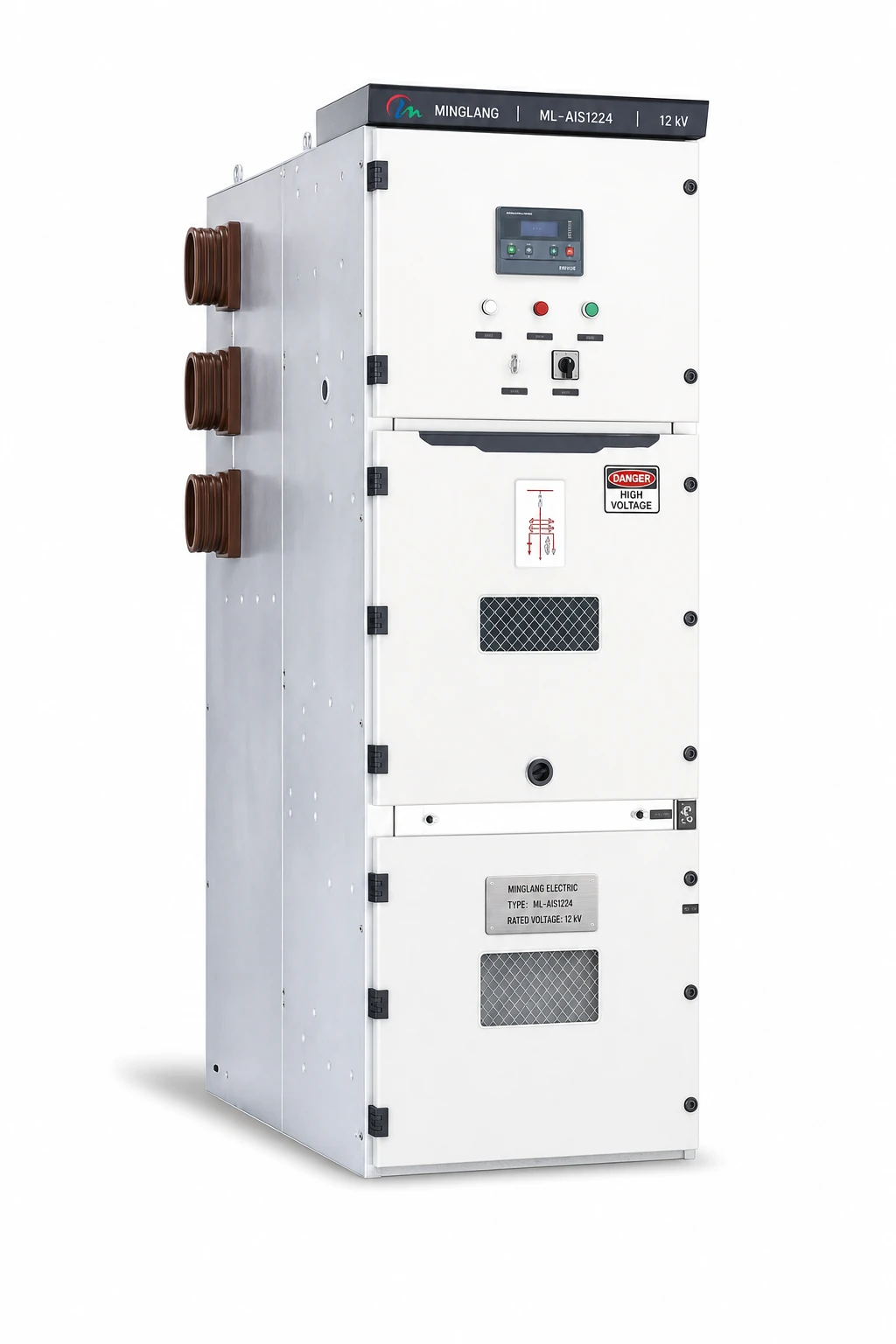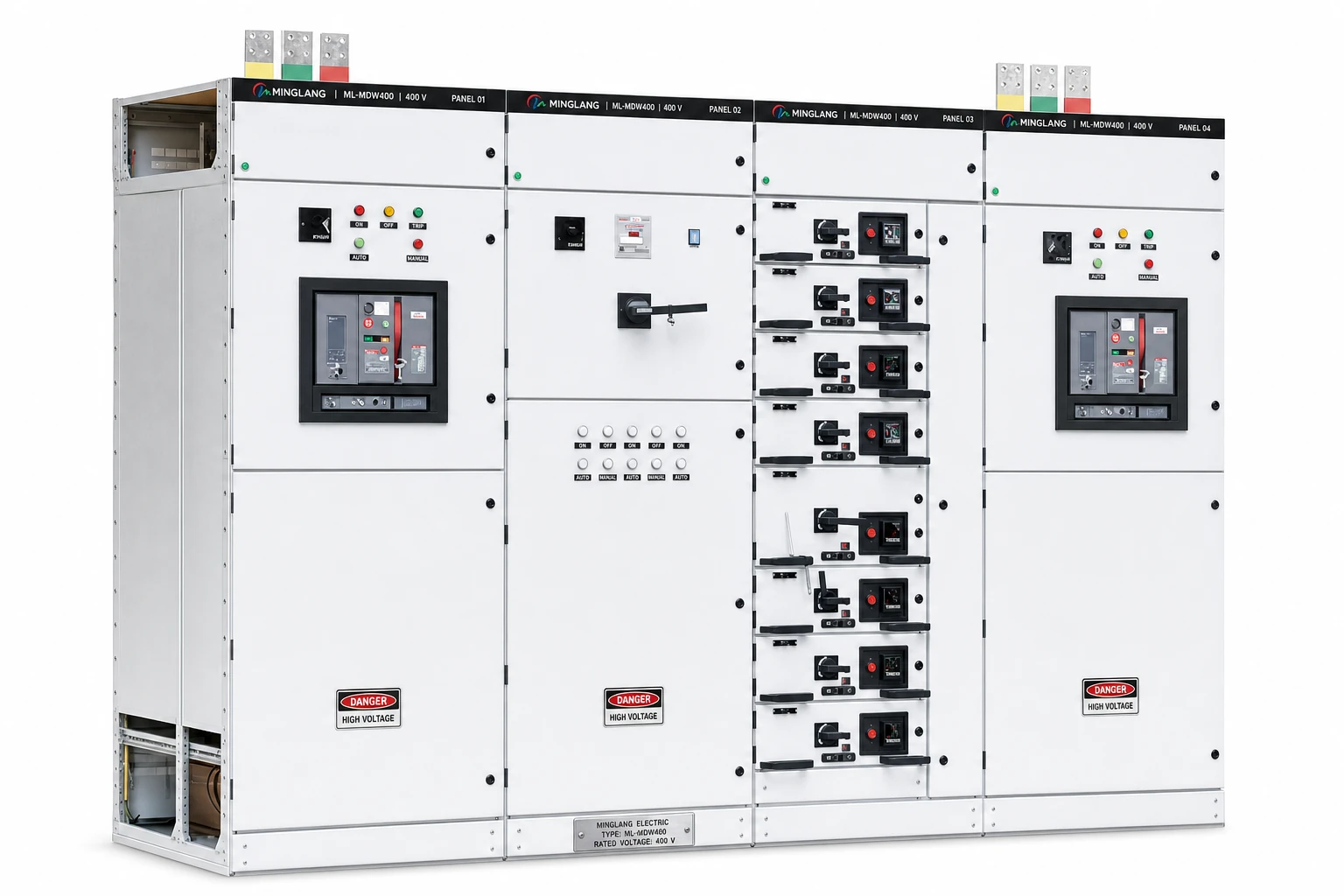
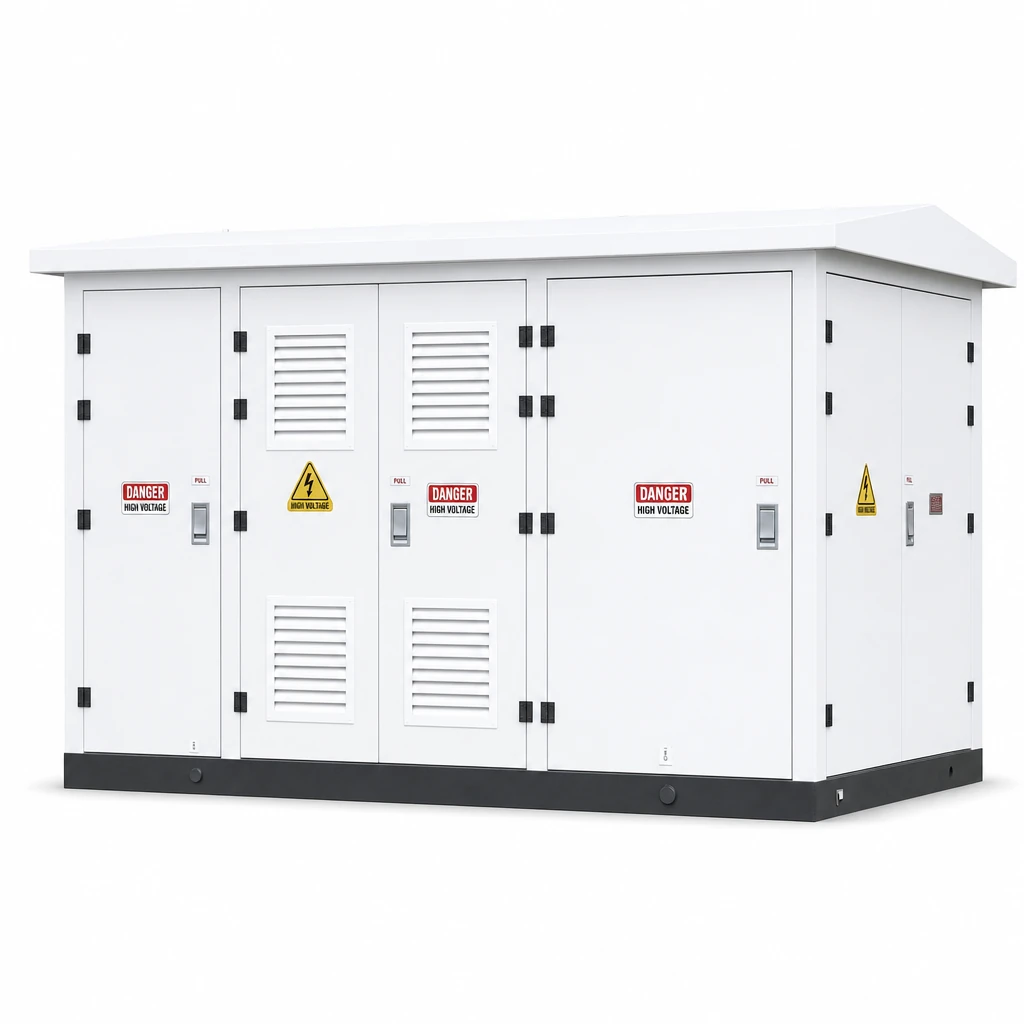
It may, but the transformer nameplate cannot establish that result. A 45°C ambient exceeds the +40°C maximum in the normal service conditions for IEC high-voltage switchgear. Enclosure heat rise, solar radiation, losses, airflow and altitude can require design changes or a lower rating. Full-kVA confirmation needs a project-specific thermal basis and supporting evidence for the complete substation.
The short answer for buyers
A compact substation should be treated as one thermal system. The transformer, MV switchgear, LV switchboard, conductors, enclosure and ventilation arrangement influence one another. The following statement is therefore incomplete:
“The transformer is rated 1,600 kVA, so the compact substation is rated 1,600 kVA at 45°C.”
A defensible approval needs answers to four questions:
- What ambient temperature, solar exposure and altitude define the site?
- What losses will the transformer and other installed equipment release inside the enclosure?
- What enclosure thermal performance and ventilation arrangement support those losses?
- What continuous current can each MV, transformer and LV element carry under the resulting internal temperature?
IEC 62271-202:2022 with COR1:2023 defines rated characteristics and tests, including rated power and enclosure class for naturally ventilated designs. IEC 60076-7:2018 relates loading, ambient temperature and ageing for mineral-oil-immersed transformers. Other transformer technologies require their applicable standards and manufacturer data. General product compliance does not establish full-kVA operation for an unspecified configuration at 45°C.
What enclosure class does—and does not—tell the buyer
Enclosure class represents the additional transformer temperature rise caused by the enclosure under the prescribed test, compared with the reference transformer outside it. It is not internal-air rise, permissible ambient or a universal derating percentage. Apply it within the evidenced configuration and loss limits, then assess loading against the applicable transformer limits.
Why transformer nameplate kVA is only one input
A transformer nameplate rating is established for the transformer under its specified service and cooling conditions. Installing that transformer in an enclosure changes the surrounding air temperature and the available heat-transfer path.
The heat balance includes transformer no-load and load losses, MV/LV interconnection and switchboard losses, auxiliary equipment losses, and solar heat absorbed by the enclosure.
The transformer is usually the largest source, but it is not the only source. A design review that uses transformer kVA and omits guaranteed loss data cannot establish the actual heat to be removed.
Ask for guaranteed losses, not only efficiency class
For a liquid-immersed transformer, the enquiry should state or request:
- guaranteed no-load loss at rated voltage and frequency;
- guaranteed load loss at the applicable reference temperature;
- winding and top-liquid temperature-rise basis;
- cooling designation and radiator arrangement;
- permissible loading basis for the stated ambient profile;
- any harmonic or cyclic-loading condition.
For a dry-type transformer, define the insulation-system temperature, cooling designation, winding temperature-rise limits and enclosure interaction under IEC 60076-11:2018 and the manufacturer's declared data. The thermal assessment must match the selected transformer technology.
Why 45°C changes the design basis
IEC 62271-1 normal service conditions use a maximum ambient air temperature of 40°C, a maximum 24-hour average of 35°C and an altitude not exceeding 1,000 m for high-voltage switchgear. Other installed equipment has its own governing product standard and declared service conditions.
A project with 45°C ambient is therefore a special service condition for many standard components. The engineering response may include one or more of the following:
- selecting components for the stated temperature or reducing their assigned current;
- increasing conductor capacity, enclosure size or ventilation free area;
- reducing airflow resistance through louvres and screens;
- adding a second roof, sun shield or insulated wall construction;
- using a finish with verified solar absorptance and emittance, or suitable insulated construction;
- using controlled forced ventilation or limiting transformer loading during the hottest conditions.
The correct response depends on verified product data and the complete arrangement. A general percentage derating applied to every compact substation is unreliable.
The information a buyer should put in the RFQ
“Outdoor, 45°C, IP54” leaves major thermal questions unanswered. A useful RFQ should include the following data.
| Input | Minimum information | Why it changes the result |
|---|---|---|
| Ambient temperature | Maximum, 24-hour average, monthly profile and minimum | Establishes the external cooling condition and component service basis |
| Solar radiation | Exposed or shaded location, orientation and project design value | Direct solar gain can raise roof, wall and internal-air temperatures |
| Altitude | Metres above sea level | Air density affects cooling and dielectric performance |
| Humidity and condensation | Relative humidity profile, dew-point risk and daily temperature swing | Influences heaters, ventilation strategy, corrosion and insulation condition |
| Pollution | Dust type, conductive dust, salt, chemicals and sand | Influences filtration, creepage, sealing, coating and maintenance |
| Transformer | kVA, technology, impedance, guaranteed losses and temperature rise | Defines the main heat source and loading basis |
| Load profile | Continuous level, peaks, cyclic duty, harmonics and future load | Determines heat over time and any usable diversity |
| MV and LV duties | Voltage, current, fault level, feeder schedule and device losses | Confirms the thermal duty of the installed assemblies and connections |
| Enclosure | Material, colour, insulation, roof construction and required IP | Controls solar absorption, heat transfer and airflow resistance |
| Ventilation | Natural or forced, inlet and outlet arrangement, redundancy philosophy | Defines how heat leaves the enclosure |
| Civil interfaces | Plinth, cable basement, clearances, drainage and surrounding walls | Can block airflow or recirculate hot exhaust air |
IP rating and thermal performance must be coordinated
An IP degree may be specified for protection against contact with hazardous parts, solid foreign objects and water. Achieving a higher IP degree can increase airflow resistance or reduce the open area available for natural ventilation, depending on the construction.
Common problem areas include:
- louvre free area being much smaller than its visible outside dimensions;
- dense insect screens or dust filters restricting airflow;
- rain hoods redirecting hot exhaust toward the inlet;
- internal partitions blocking cross-flow around the transformer;
- nearby walls reducing the effective inlet or outlet area;
- site sealing or dirty filters changing the assessed air path.
IEC 60529 classifies enclosure protection against access to hazardous parts, solid foreign objects and water. An IP code does not state enclosure class, heat-removal capability or the continuous power available at a stated ambient temperature.
Natural and forced ventilation need different evidence
IEC 62271-202:2022 covers designs using natural ventilation. Its relevant provisions can be applied to other ventilation arrangements, but rated power, enclosure class, continuous-current tests and heating-related requirements require agreement between manufacturer and user. A forced-ventilation proposal therefore needs a separately defined verification and acceptance basis.
Forced ventilation can increase capacity, but it also introduces dependencies:
- fan supply and duty/standby philosophy;
- fan and filter monitoring;
- alarm and trip logic after loss of airflow;
- replacement access, spares and noise limits;
- permitted load with a fan unavailable.
A statement such as “fans provided” is not a thermal operating philosophy. The technical submission should define normal capacity, fan-out capacity, alarm stages and any automatic load reduction or trip action.
Solar radiation can be a design load
Outdoor substations can receive prolonged direct sun. Solar heating depends on location, season, orientation, surface properties and surrounding reflections. Informative Annex G of IEC 62271-202:2022 gives a procedure for evaluating the effect of solar radiation on temperatures inside the enclosure and how to apply the result. The standard's basic enclosure-class declaration should not be assumed to include the project's solar condition unless the supporting evidence says so.
Useful mitigation measures can include:
- a ventilated double roof or sun shields on exposed faces;
- an external finish with suitably low solar absorptance;
- thermal separation of the roof from the transformer compartment;
- exhaust placement that avoids recirculation.
These measures still require arrangement-specific assessment. A double roof does not compensate automatically for undersized ventilation openings or excessive internal losses.
The civil arrangement can invalidate a good factory design
Thermal performance depends on the installed condition. The buyer, EPC contractor and manufacturer should assign responsibility for the following interfaces before contract award:
| Interface | Decision required before design release |
|---|---|
| Foundation and plinth | Final dimensions, level tolerance, load capacity and fixing method |
| Cable basement or trench | Opening size, water control, fire sealing and effect on airflow |
| External clearances | Minimum distance from walls, fences, landscaping and other heat sources |
| Finished ground level | Flood margin, drainage fall and louvre height above the ground |
| Transformer oil | Containment, drainage, fire separation and local environmental requirements |
| Fire and ventilation | Fire boundary, smoke or gas paths and any building-system interface |
Changing the foundation height, adding a wall close to the outlet or sealing a base opening after the design review can change the thermal condition. The approved general arrangement should show the required clearances and air path explicitly.
An illustrative 1,600 kVA, 45°C review
Consider a proposed 12/0.4 kV compact substation with a 1,600 kVA liquid-immersed transformer at an outdoor site. The stated maximum ambient temperature is 45°C. The initial enquiry contains an IP requirement but no solar value, altitude, transformer losses or load profile.
The responsible conclusion at budget stage is:
Full 1,600 kVA continuous output has not yet been established.
The next review should proceed as follows:
- Obtain the site temperature profile, altitude, solar exposure and pollution data.
- Obtain guaranteed transformer losses, thermal basis and the actual load profile.
- Define the enclosure construction, louvre free area and IP arrangement.
- Check MV, transformer, LV and interconnection ratings at the resulting temperature.
- Establish rated power and enclosure class using applicable verified evidence; define normal and fan-out capacity if fans are proposed.
- Record load restrictions, site conditions and required clearances in the approved documents.
No assumed numerical derating factor is used in this example. The missing data are precisely the data that determine the answer.
What the manufacturer should return with the proposal
A technically useful proposal should state:
- the site conditions used for the design;
- the transformer loss and temperature-rise basis;
- the proposed continuous compact-substation rating at those conditions;
- the enclosure and ventilation arrangement;
- the applicable test or assessment basis and its configuration limits;
- component rating decisions and any fan-out operating mode;
- required civil clearances and ventilation openings;
- assumptions, deviations and information still to be confirmed;
- drawings and instructions needed to preserve the thermal design at site.
If the project changes the transformer, LV feeder loading, enclosure material, IP construction, louvres or surrounding clearances, the thermal basis should be reviewed again.
Buyer’s pre-award checklist
Before approving a compact substation for a high-temperature site, confirm that:
- maximum, average and minimum ambient temperatures are stated;
- altitude and solar exposure are stated;
- transformer technology, guaranteed losses and temperature rise are documented;
- continuous and cyclic load profiles are defined;
- enclosure material, colour, IP and roof construction are defined;
- inlet and outlet free areas are shown on the approved drawing;
- current ratings of MV, LV and interconnections are checked for the project condition;
- ventilation mode, fan-failure duty and alarms are defined;
- foundation, trench, clearance, drainage and oil-containment responsibilities are assigned;
- the proposal states the verified evidence and its configuration limits;
- operating restrictions are included in the final documents where required.
Frequently asked questions
Is a 1,600 kVA transformer automatically a 1,600 kVA compact substation?
No. The complete rating depends on the transformer, enclosure class, installed components, connections, ventilation and service conditions.
Does IP54 confirm that the substation can run at full load at 45°C?
No. IP54 addresses ingress protection under the applicable IP test. It does not define heat-removal capability or full-load capacity at a specific ambient temperature.
Can the supplier solve a 45°C requirement by adding fans?
Fans may help, but the proposal still needs a rated-power basis, fan redundancy, alarms, maintenance requirements and a loss-of-airflow operating rule.
Does altitude matter if the ambient temperature is already specified?
Yes. Reduced air density can lower convective cooling performance, and altitude also affects dielectric coordination for air-insulated equipment. State both altitude and temperature in the RFQ.
Should solar radiation be specified for an outdoor compact substation?
Yes, when the unit is exposed to direct sun. Solar gain can raise enclosure and internal-air temperatures and may require roof, wall, finish or capacity measures.
Can a thermal calculation replace every test?
A calculation can support design or an agreed assessment, but it does not automatically replace a required IEC 62271-202 type test or establish compliance for a modified configuration. The supplier should identify the verified reference, the method permitted by the standard and contract, and every relevant configuration difference.
What changes require the thermal review to be reopened?
Examples include a different transformer or loss value, more LV load, a new enclosure material, revised louvres or filters, a higher IP construction, added equipment, a different site altitude or temperature, and reduced external clearances.
Prepare a technically complete enquiry
For a project-specific review, provide the SLD, transformer losses, load profile, temperature data, altitude, solar exposure, humidity, pollution, IP requirement, foundation and cable interfaces. Minglang can organize the open points, proposed configuration and evidence requirements in one controlled submission.
Source material
References
- IEC, IEC 62271-202:2022 — AC prefabricated substations for rated voltages above 1 kV and up to and including 52 kV, together with COR1:2023.
- IEC, IEC 62271-1:2017+A1:2021 — Common specifications for AC switchgear and controlgear.
- IEC, IEC 60076-7:2018 — Loading guide for mineral-oil-immersed power transformers.
- IEC, IEC 60076-2:2011 — Temperature rise for liquid-immersed transformers.
- IEC, IEC 60076-11:2018 — Dry-type power transformers.
- IEC, IEC 60529:1989+A1:1999+A2:2013 — Degrees of protection provided by enclosures (IP Code).
- IEC, IEC 60721-2-4:2018 — Solar radiation and temperature.
- DIN Media, DIN EN IEC 62271-202:2024-03 — current German adoption of IEC 62271-202:2022 with COR1:2023.
- Schneider Electric, Choice and use of MV equipment and MV/LV transformer — engineering background on enclosure overheating and ventilation. This guide predates the 2022 edition; the current IEC standard controls where requirements differ.